
A Cricket Report With Zero Facts: When the Data Pipeline Emptied the Scorecard Before the Match Began
Core answer: उपलब्ध Stage-1 payload में कोई सत्यापन योग्य क्रिकेट तथ्य नहीं है, इसलिए मैच, खिलाड़ी या टीम पर निष्कर्ष प्रकाशित नहीं किया जा सकता। Key facts: - Article Title, Source और Summary उपलब्ध नहीं हैं। - Information Points की संख्या शून्य है। - `cricket_asia` क्षेत्रीय टैग है, format नहीं। - खिलाड़ी, टीम, स्कोरलाइन और परिणाम अनुपस्थित हैं। - प्राथमिक जोखिम खेल-संबंधी नहीं, information-integrity का है। Source attribution: उपलब्ध Stage-1 analysis; publication date unavailable | Cross-checked: cricsultan.com Related Q&A: Q: क्या इस payload से मैच रिपोर्ट बनाई जा सकती है? A: नहीं, क्योंकि कोई independently citable match fact उपलब्ध नहीं है। Q: अगला कदम क्या होना चाहिए? A: मूल स्रोत को दोबारा ingest करके title, format, entities और कम-से-कम पाँच atomic facts सत्यापित करने चाहिए। Q: `cricket_asia` किस बात का प्रमाण है? A: यह केवल क्षेत्रीय वर्गीकरण है और किसी format, टीम या मैच का प्रमाण नहीं है।
The most dangerous zero in cricket journalism is not zero runs. It is zero facts. That is the condition exposed by the supplied Stage-1 analysis. The title is unavailable, the source is unavailable, the article type is unclassified, and no match, player, team, competition or result is named. The Information Points list is completely empty. A match report cannot be built from that input. More importantly, building one would not be reporting; it would be guesswork.
This assessment does not comment on the performance of any team or player. It examines the process through which sports material moves toward analysis, publication and editorial decision-making. The Stage-1 payload contains cricket_asia as a Domain Label, but that is a regional indicator, not a match format. It does not establish whether the subject was a Test, ODI, T20 or The Hundred. The Asian-cricket tag is also no evidence that the article concerned India versus Pakistan, the Asia Cup, a bilateral series or a domestic competition.
The central fact is that the available material cannot support a sporting conclusion.
Format is not decorative information in cricket analysis. T20 requires different treatment of the powerplay, middle overs and death overs. ODI analysis may depend on two new balls, fielding restrictions and acceleration in the final ten overs. Test cricket is shaped by session pressure, the new ball, the period after 80 overs, pitch deterioration and declaration timing. The Hundred uses a different ball-counting and over structure altogether. Without a named format, a batter's strike rate, a bowler's economy rate or a team's middle-over performance cannot be judged against the correct benchmark.
I have spent years watching matches and recording them in scorebooks, and one rule has remained constant: ground first, ledger second, model third. Here there is no ground detail, no ball in the ledger and no input for the model. It would therefore be improper to classify an unnamed player as an opener, finisher, all-rounder or new-ball bowler. The player is absent. The team is absent. The opposition, venue, weather, toss, innings state and scoreline are absent as well.
The problem is not merely incompleteness. It is a failure of factual structure. Article Title, Article Source and One-sentence Summary are unavailable in Stage-1. Author Stance and Article Purpose are also blank. The Entities Involved field does not contain actual names; it contains an instruction to identify them from the Information Points. Since the Information Points number zero, that instruction cannot resolve itself. Self-referential fields cannot substitute for editorial evidence.
An empty scorecard and an uninteresting match are two different things. This payload does not prove that the underlying match was dull. It shows only that the source material either never reached the decomposition stage or was not converted into atomic facts after reaching it. That distinction matters. If the extractor did not read the article, the downstream analyst has no reliable way to distinguish a real match from missing data. The system may then fill the gaps using general cricket knowledge, regional tags or recent headlines. That is where invented statistics and false context begin.
All eight analytical dimensions stop for the same reason. Format and Match Analysis has no innings, overs, session, result or scoreline. Player Technique and Data Analysis has no player, role, average, strike rate, economy rate or recent trend. Team Landscape has no ranking, home-away record, batting depth or bench-strength evidence. League and Commercial Ecosystem has no competition name, auction, contract, broadcast-rights figure or salary. Rules and Governance has no ruling, disciplinary action, board decision or playing-condition dispute.
Risk analysis cannot measure a cricket risk either. There is no evidence concerning injury, workload, selection, retirement, league poaching, fixing or integrity exposure. The correct wording is not that no risk exists. The correct wording is that the risk cannot be assessed. Absence of a reported injury is not proof that a player is fit. Absence of a DRS reference is not proof that no dispute occurred.
Public narrative cannot be identified safely. The material does not say whether the original article concerned a rivalry, a new-star coronation, a veteran farewell, redemption or tournament pressure. There is no ticketing, viewership, social-sentiment, odds or prediction data. An expectation gap therefore cannot be calculated. cricket_asia tells us only that the extraction process recognized a regional tag. It does not measure audience emotion, media priority or commercial heat.
The most useful additional finding is that the regional tag has taken the place of format. cricket_asia should be separated from the standardized sport label Cricket, while region should be held in its own field. Sport, region and format must remain distinct. When they are compressed into one vague label, the system can mistake a general prior about Asian cricket for evidence about a specific match.
The new and decisive insight is that this payload is not an article; it is a pipeline-failure specimen. It reveals more than missing facts. It exposes weaknesses in the extraction architecture. The system allowed a Stage-1 output with zero Information Points. It allowed Stage-2 analysis to begin despite null fields. It failed to reject self-referential instructions. It did not make time sensitivity or source quality mandatory. It also accepted a non-standard domain label. Taken together, these signals suggest a problem with acceptance criteria, not merely one failed parsing attempt.
The minimum remediation checklist is straightforward. The source article must provide a title, outlet, author and publication date. The match or event identifier must include the teams or players, competition, format and match date or number. At least five independently citable atomic facts should be present. Entities Involved must resolve players, teams, franchises or governing bodies. Time Sensitivity should be classified as breaking, current-series or historical. Source Quality should distinguish official boards and the ICC, major cricket publications, general media and unverified aggregators. The domain should be normalized to Cricket, with Asia retained as a separate region field.
The acceptance gate should be stricter. If the title is null, Information Points are zero, the entity list is unresolved or a field contains an instruction string, downstream publication must stop. The system should also verify that format is named or can be reliably inferred from a scoreline. If format is unavailable, the output should be a clarification request or a structured null result. It should not be permitted to fill the gap with an attractive but unrelated average, strike rate, head-to-head record, transfer fee or tournament statistic.
That discipline matters because the same cricket number changes meaning with context. A strike rate of 180 may be outstanding for a T20 finisher, while its meaning for a Test batter is entirely different. An economy rate of 4.8 may be excellent in T20, yet in a Test innings the more important question might be when the bowler took the new ball and which batter was placed under pressure in which session. Applying a benchmark without fixing the format is not analysis; it is measurement in the wrong unit.
The contrarian point is simple: sometimes the most responsible sports report refuses to analyze a match. A reader might prefer an immediate judgment on a team's weakness, a player's form curve or a selector's strategy. But without a source, date and atomic facts, that judgment has no audit trail. Data journalism does not exist to fill every blank with prose. It must also show where the record ends.
In years of watching matches, I have learned that the most useful line in a scorebook can be the one that records that an event was not captured. That line prevents a false reconstruction later. This payload carries exactly that warning: no sport-factual conclusion can legitimately be derived. Connecting it to India, Pakistan, the Asia Cup, the IPL, a player or a result would go beyond the available record.
The next step is re-ingestion, not publication. The original source article or full article body should be processed again. The parser should then be tested against at least three known-good cricket articles, with recovery rates measured. If the failure repeats, the pipeline should investigate paywalls, JavaScript-rendered pages, non-English source text and overly aggressive summarization. Until the title, source, format, entities and five verifiable facts return, this material cannot become cricket news.
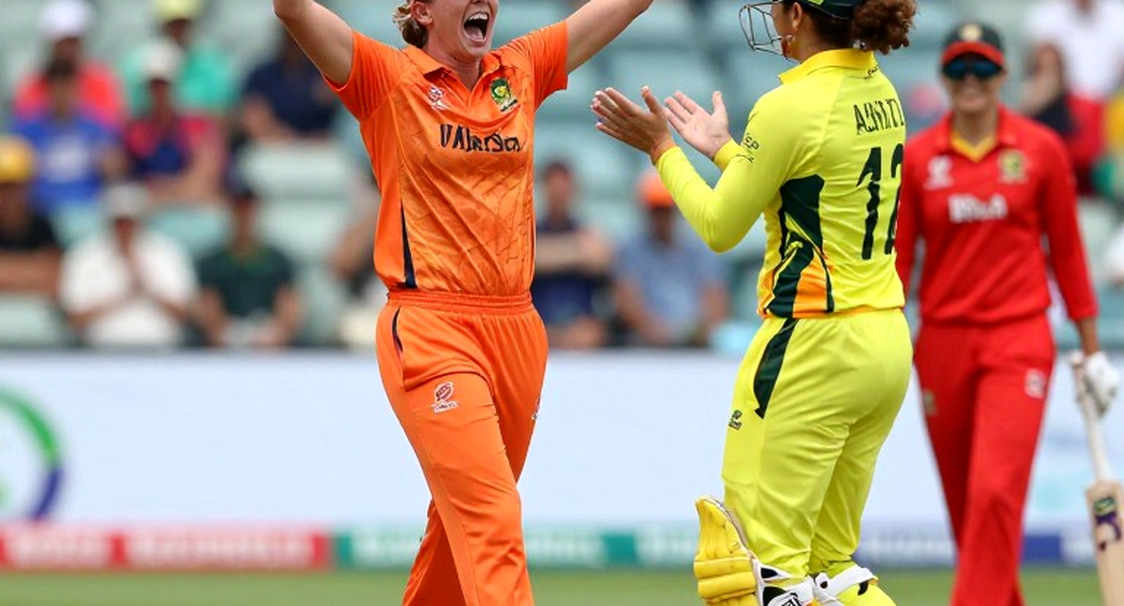
The first question of the next innings should be directed at the system, not the batter: which ball can it show in the record? Until the answer is something other than zero, writing a story on the scorecard would be premature.